Tampilkan postingan dengan label Artist's Concept. Tampilkan semua postingan

Rabu, 04 Juli 2018

A Kuiper Belt Pair? Artist's Concept of 2014 MU69 as a Binary Object

A Kuiper Belt Pair? Artist's Concept of 2014 MU69 as a Binary Object


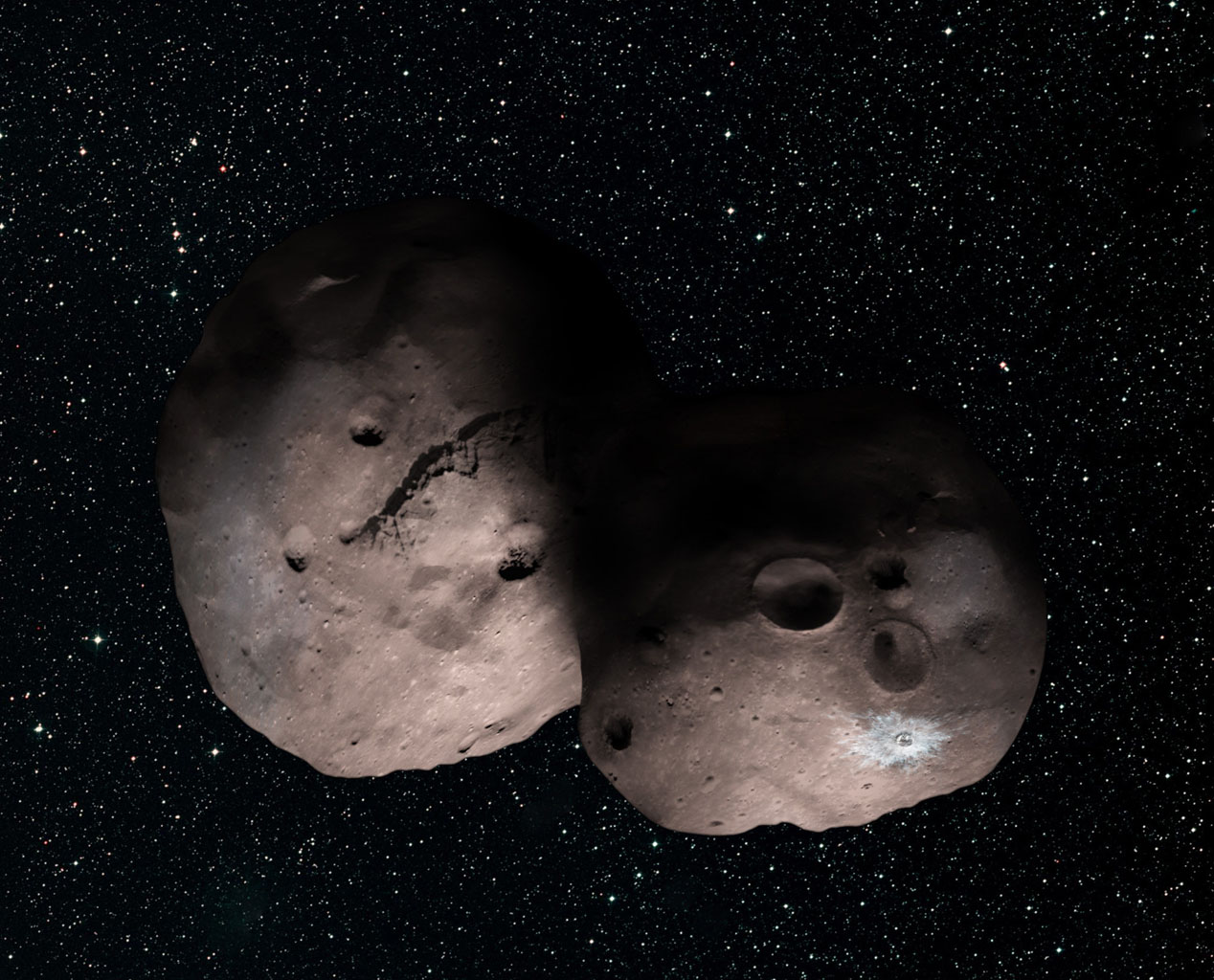
This is one artist's concept of Kuiper Belt object 2014 MU69, the next flyby target for NASA's New Horizons mission. This binary concept is based on telescope observations made at Patagonia, Argentina, on July 17, 2017, when MU69 passed in front of a star. New Horizons scientists theorize that it could be a single body with a large chunk taken out of it (see PIA21868), or two bodies that are close together or even touching.
The Johns Hopkins University Applied Physics Laboratory in Laurel, Maryland, designed, built, and operates the New Horizons spacecraft, and manages the mission for NASA's Science Mission Directorate. The Southwest Research Institute, based in San Antonio, leads the science team, payload operations and encounter science planning. New Horizons is part of the New Frontiers Program managed by NASA's Marshall Space Flight Center in Huntsville, Alabama.

1600x1200              1920x1200  


TRAPPIST-1 System

TRAPPIST-1 System


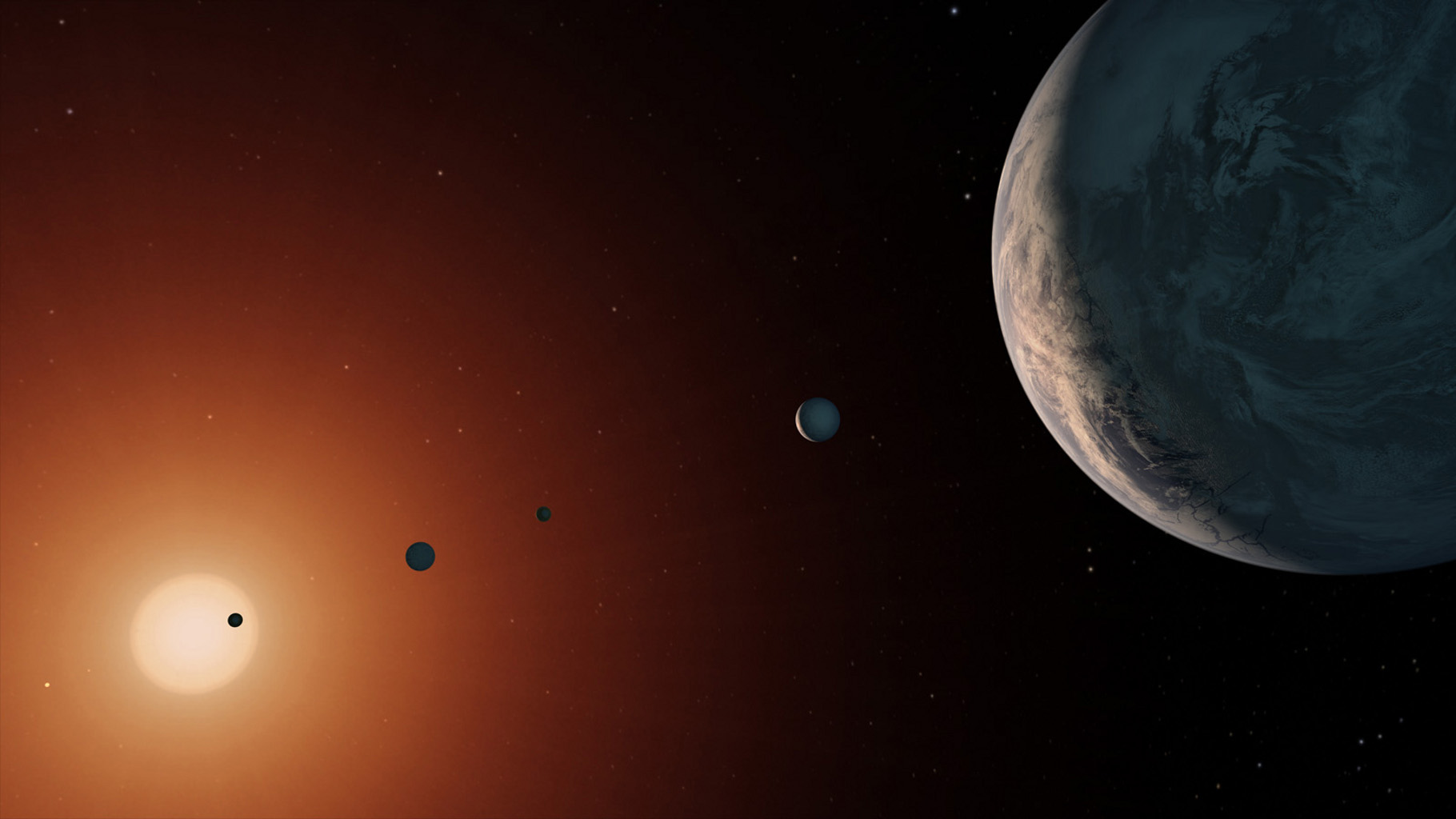
This illustration shows what the TRAPPIST-1 system might look like from a vantage point near planet TRAPPIST-1f (at right).
The system has been revealed through observations from NASA's Spitzer Space Telescope and the ground-based TRAPPIST (TRAnsiting Planets and PlanetesImals Small Telescope) telescope, as well as other ground-based observatories. The system was named for the TRAPPIST telescope.
The seven planets of TRAPPIST-1 are all Earth-sized and terrestrial, according to research published in 2017 in the journal Nature. TRAPPIST-1 is an ultra-cool dwarf star in the constellation Aquarius, and its planets orbit very close to it.
They are likely all tidally locked, meaning the same face of the planet is always pointed at the star, as the same side of our moon is always pointed at Earth. This creates a perpetual night side and perpetual day side on each planet.
TRAPPIST-1b and c receive the most light from the star and would be the warmest. TRAPPIST-1e, f and g all orbit in the habitable zone, the area where liquid water is most likely to be detected. But any of the planets could potentially harbor liquid water, depending on their compositions.
NASA's Jet Propulsion Laboratory, Pasadena, California, manages the Spitzer Space Telescope mission for NASA's Science Mission Directorate, Washington. Science operations are conducted at the Spitzer Science Center at Caltech, also in Pasadena. Spacecraft operations are based at Lockheed Martin Space Systems Company, Littleton, Colorado. Data are archived at the Infrared Science Archive housed at Caltech/IPAC. Caltech manages JPL for NASA


Brown Dwarf Weather (Artist's Concept)

Brown Dwarf Weather

animation

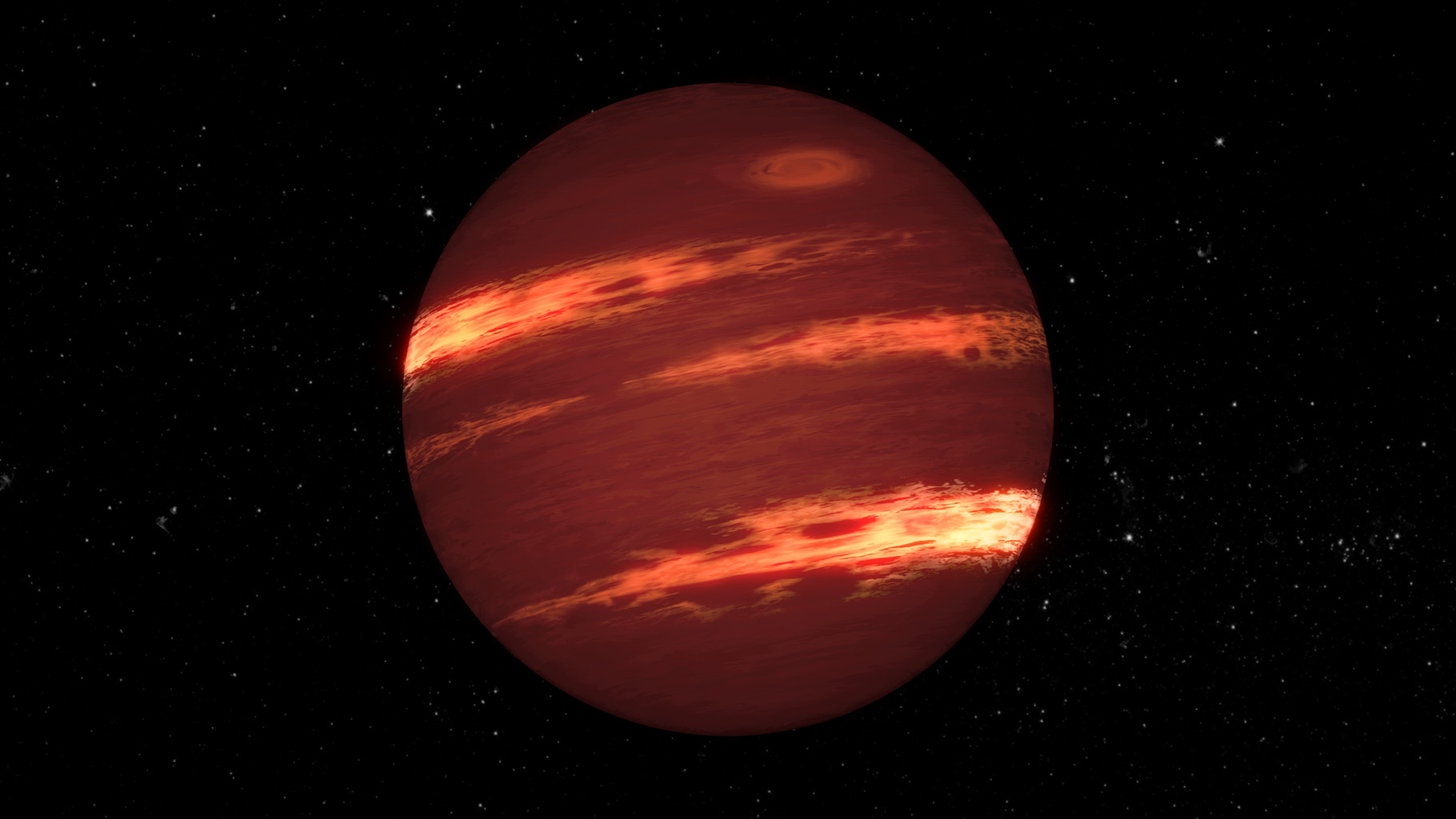
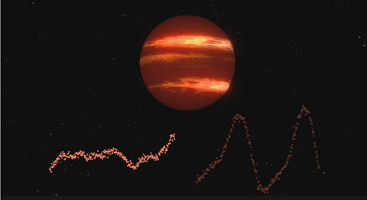
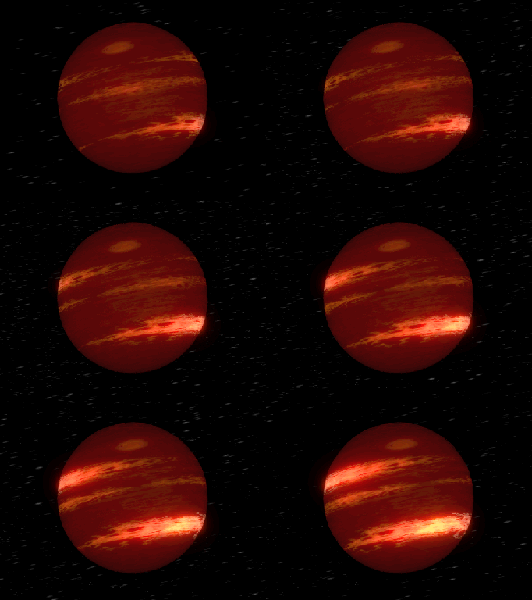
This artist's concept animation shows a brown dwarf with bands of clouds, thought to resemble those seen on Neptune and the other outer planets in the solar system.
By using NASA's Spitzer Space Telescope, astronomers have found that the varying glow of brown dwarfs over time can be explained by bands of patchy clouds rotating at different speeds.
NASA's Jet Propulsion Laboratory manages the Spitzer Space Telescope mission for NASA's Science Mission Directorate, Washington. Science operations are conducted at the Spitzer Science Center at Caltech in Pasadena, California. Spacecraft operations are based at Lockheed Martin Space Systems Company, Littleton, Colorado. Data are archived at the Infrared Science Archive housed at the Infrared Processing and Analysis Center at Caltech. Caltech manages JPL for NASA.


Giant Exoplanet and Debris Disk (Artist's Concept)

Giant Exoplanet and Debris Disk
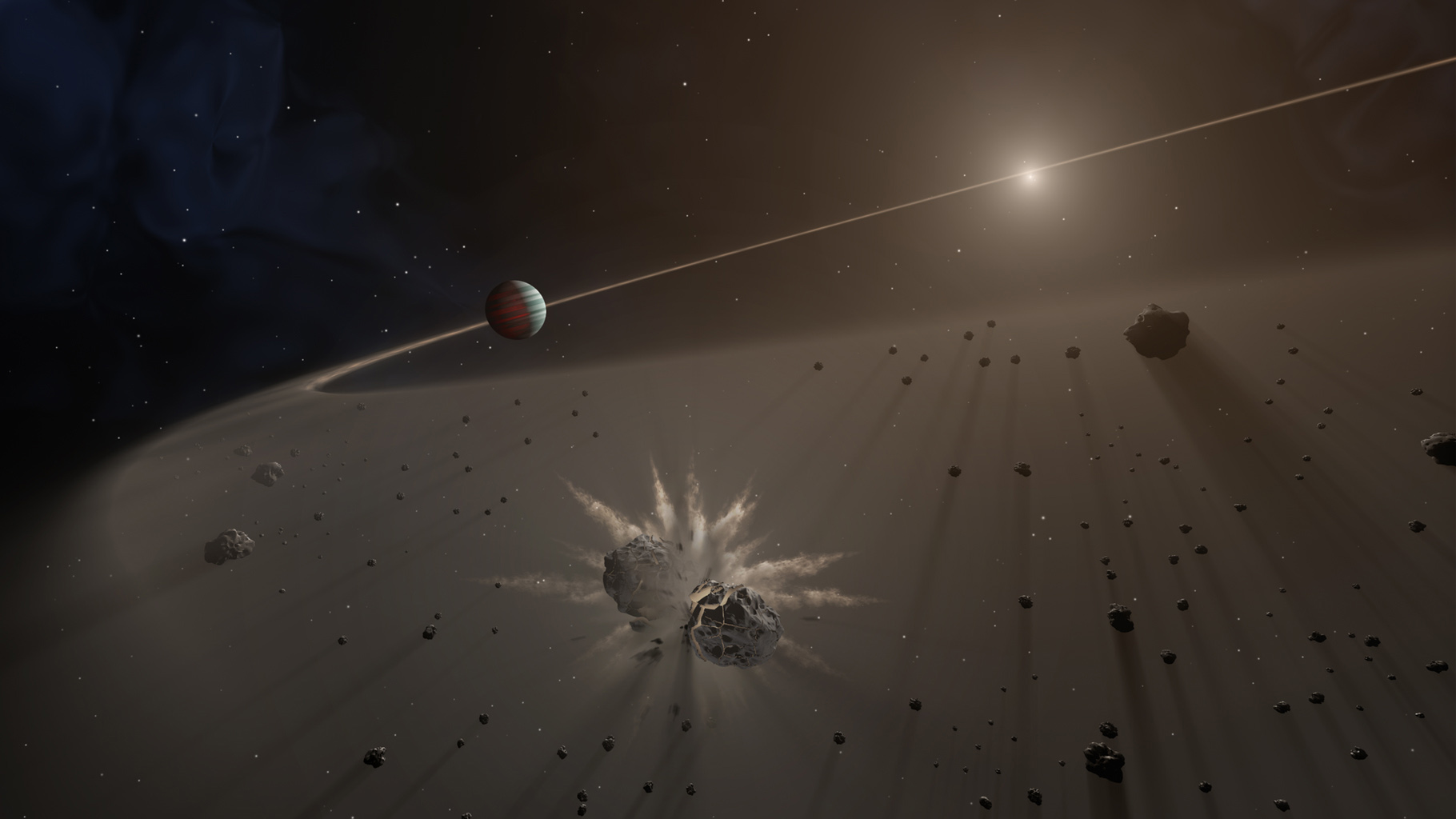
This artist's rendering shows a giant exoplanet causing small bodies to collide in a disk of dust.
A study in The Astronomical Journal finds that giant exoplanets with long-period orbits are more likely to be found around young stars that have a disk of dust and debris than those without disks. The study focused on planets more than five times the mass of Jupiter. The astronomers are conducting the largest survey to date of stars with dusty debris disks, and finding the best evidence yet that giant planets are responsible for keeping that material in check.


Polluted White Dwarf

Polluted White Dwarf
This artist's concept shows an exoplanet and debris disk orbiting a polluted white dwarf.
White dwarfs are dim, dense remnants of stars similar to the Sun that have exhausted their nuclear fuel and blown off their outer layers. By "pollution," astronomers mean heavy elements invading the photospheres -- the outer atmospheres -- of these stars.
The leading explanation is that exoplanets could push small rocky bodies toward the star, whose powerful gravity would pulverize them into dust. That dust, containing heavy elements from the torn-apart body, would then fall on the star.
NASA's Spitzer Space Telescope has been instrumental in expanding the field of polluted white dwarfs orbited by hot, dusty disks. Since launch in 2004, Spitzer has confirmed about 40 of these special stars. Another space telescope, NASA's Wide-field Infrared Survey Explorer (WISE), also detected a handful, bringing the total up to about four dozen known today. Because these objects are so faint, infrared light is crucial to identifying them.


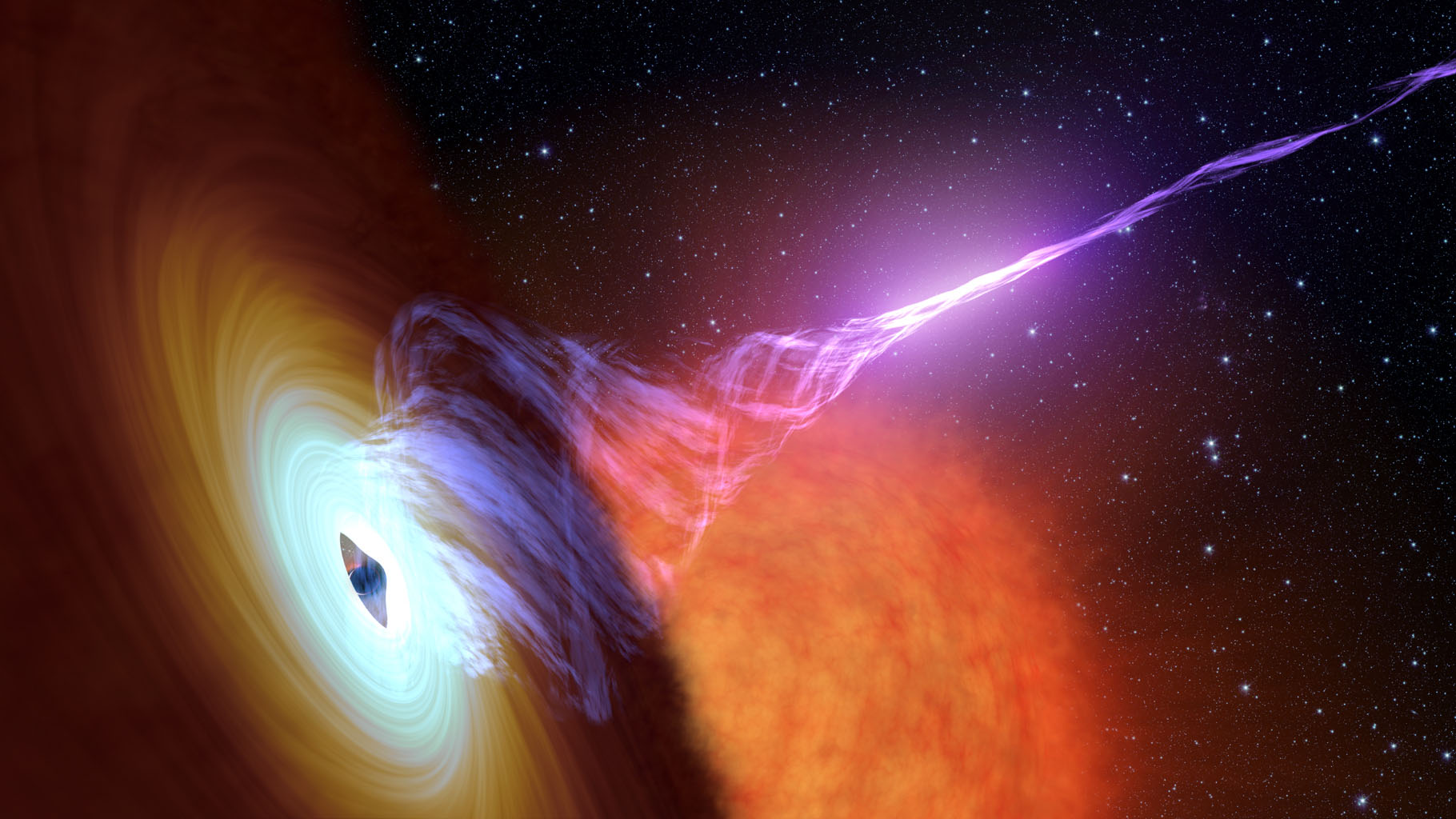
Black Hole With Jet (Artist's Concept)

Black Hole With Jet
This artist's concept shows a black hole with an accretion disk -- a flat structure of material orbiting the black hole -- and a jet of hot gas, called plasma.
Using NASA's NuSTAR space telescope and a fast camera called ULTRACAM on the William Herschel Observatory in La Palma, Spain, scientists have been able to measure the distance that particles in jets travel before they "turn on" and become bright sources of light. This distance is called the "acceleration zone."
NuSTAR is a Small Explorer mission led by Caltech and managed by JPL for NASA's Science Mission Directorate in Washington. NuSTAR was developed in partnership with the Danish Technical University and the Italian Space Agency (ASI). The spacecraft was built by Orbital Sciences Corp., Dulles, Virginia. NuSTAR's mission operations center is at UC Berkeley, and the official data archive is at NASA's High Energy Astrophysics Science Archive Research Center. ASI provides the mission's ground station and a mirror archive. Caltech manages JPL for NASA.


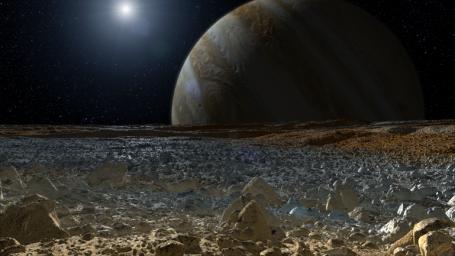
Simulated View from Europa's Surface (Artist's Concept)

Simulated View from Europa's Surface
This artist's concept shows a simulated view from the surface of Jupiter's moon Europa. Europa's potentially rough, icy surface, tinged with reddish areas that scientists hope to learn more about, can be seen in the foreground. The giant planet Jupiter looms over the horizon.
This work was conducted with Europa study funds from NASA's Science Mission Directorate, Washington, D.C. JPL is a division of the California Institute of Technology, Pasadena.

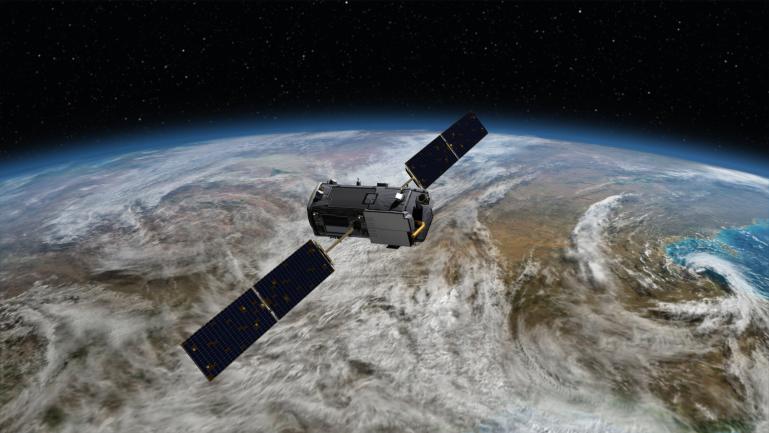
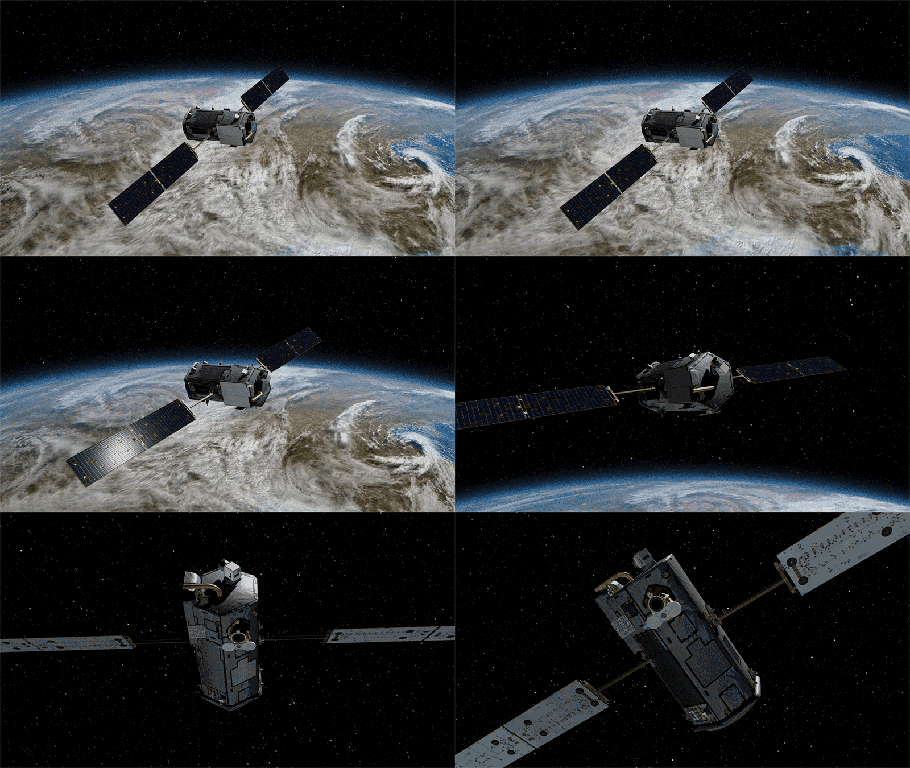
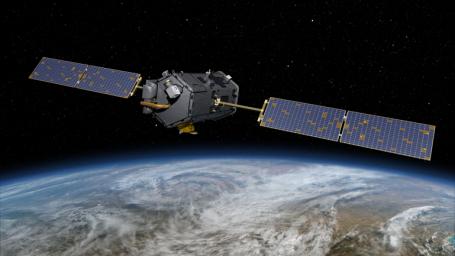
NASA's Orbiting Carbon Observatory (OCO-2) (Artist Concept)

Orbiting Carbon Observatory (OCO-2)
Artist's rendering of NASA's Orbiting Carbon Observatory (OCO)-2, one of five new NASA Earth science missions set to launch in 2014, and one of three managed by JPL. With atmospheric carbon dioxide now at its highest concentration in recorded history, the need to make precise, global, space-based measurements of this key greenhouse gas has never been more urgent. As carbon dioxide levels have increased, so too have uncertainties about them -- we don't yet have a clear picture of how these emissions are partitioned between Earth's ocean, land and atmosphere, or how Earth's forests, plants and ocean will respond to increasing levels of carbon dioxide in the future. OCO-2 will address these critical questions to help us better assess the health of our warming planet.
OCO-2, managed by NASA's Jet Propulsion Laboratory in Pasadena, Calif., will launch from Vandenberg Air Force Base, Calif., on a Delta II rocket in July, 2014.

NASA's OCO-2 Instrument Completes Construction

OCO-2 Instrument Completes Construction
Technicians prep the OCO-2 instrument for shipping at JPL. The instrument consists of three parallel, high-resolution spectrometers, integrated into a common structure and fed by a common telescope. Each spectrometer spreads reflected sunlight into its various colors like a prism, focusing on a different, narrow color range to detect light with the specific colors absorbed by carbon dioxide and molecular oxygen. The amount of light absorbed at these specific colors is proportional to the concentration of carbon dioxide in the atmosphere.
OCO-2 is managed by JPL for NASA's Science Mission Directorate, Washington. Orbital Sciences Corporation, Dulles, Va., built the spacecraft and provides mission operations under JPL's leadership. The California Institute of Technology in Pasadena manages JPL for NASA

view image full-res JPG
download full-res TIFF

Selasa, 03 Juli 2018

NASA's Orbiting Carbon Observatory (OCO)-2 (Artist Concept)

Carbon Observatory (OCO)-2 
This most recent artist's rendering shows NASA's Orbiting Carbon Observatory (OCO)-2, one of five new NASA Earth science missions set to launch in 2014, and one of three managed by JPL. With atmospheric carbon dioxide now at its highest concentration in recorded history, the need to make precise, global, space-based measurements of this key greenhouse gas has never been more urgent. As carbon dioxide levels have increased, so too have uncertainties about them -- we don't yet have a clear picture of how these emissions are partitioned between Earth's ocean, land and atmosphere, or how Earth's forests, plants and ocean will respond to increasing levels of carbon dioxide in the future. OCO-2 will address these critical questions to help us better assess the health of our warming planet.
OCO-2 is managed by JPL for NASA's Science Mission Directorate, Washington. Orbital Sciences Corporation, Dulles, Va., built the spacecraft and provides mission operations under JPL's leadership. The California Institute of Technology in Pasadena manages JPL for NASA.

view image full-res JPG
download full-res TIFF

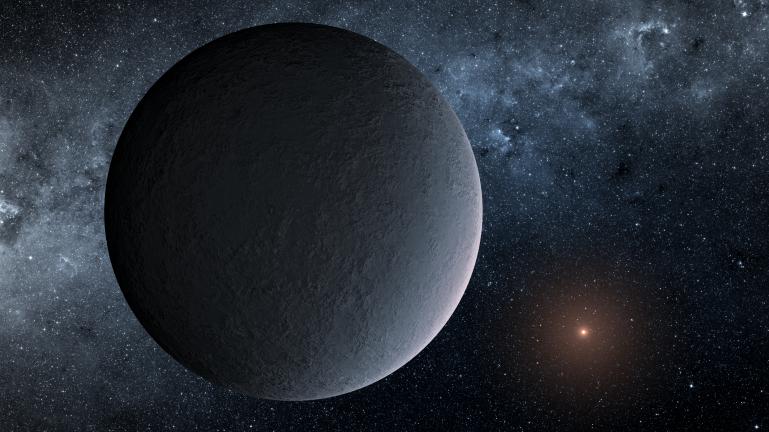
Iceball Planet Artist's Concept

Iceball Planet

This artist's concept shows OGLE-2016-BLG-1195Lb, a planet discovered through a technique called microlensing. The planet was reported in a 2017 study in the Astrophysical Journal Letters. Study authors used the Korea Microlensing Telescope Network (KMTNet), operated by the Korea Astronomy and Space Science Institute, and NASA's Spitzer Space Telescope, to track the microlensing event and find the planet.
Although OGLE-2016-BLG-1195Lb is about the same mass as Earth, and the same distance from its host star as our planet is from our sun, the similarities may end there.
This planet is nearly 13,000 light-years away and orbits a star so small, scientists aren't sure if it's a star at all.
NASA's Jet Propulsion Laboratory manages the Spitzer Space Telescope mission for NASA's Science Mission Directorate, Washington. Science operations are conducted at the Spitzer Science Center at Caltech in Pasadena, California. Spacecraft operations are based at Lockheed Martin Space Systems Company, Littleton, Colorado. Data are archived at the Infrared Science Archive housed at the Infrared Processing and Analysis Center at Caltech. Caltech manages JPL for NASA.

view full-res JPG
download full-res TIFF

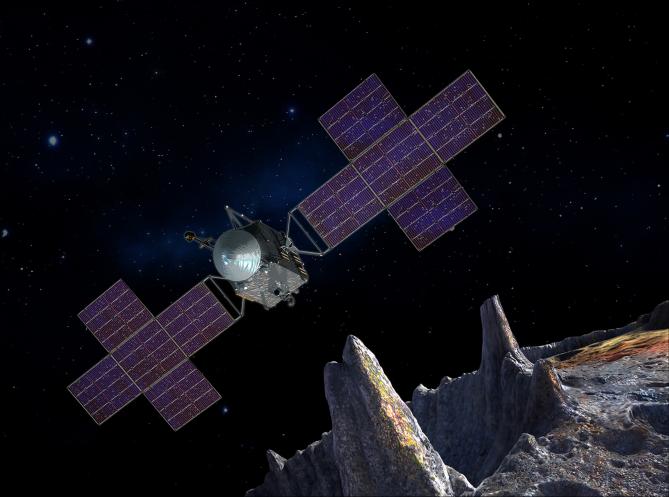
Artist's Concept of Psyche Spacecraft with Five-Panel Array

Five-Panel Array

This artist's-concept illustration depicts the spacecraft of NASA's Psyche mission near the mission's target, the metal asteroid Psyche. The artwork was created in May 2017 to show the five-panel solar arrays planned for the spacecraft.
The spacecraft's structure will include power and propulsion systems to travel to, and orbit, the asteroid. These systems will combine solar power with electric propulsion to carry the scientific instruments used to study the asteroid through space.
The mission plans launch in 2022 and arrival at Psyche, between the orbits of Mars and Jupiter, in 2026. This selected asteroid is made almost entirely of nickel-iron metal. It offers evidence about violent collisions that created Earth and other terrestrial planets

view full-res JPG
download full-res TIFF


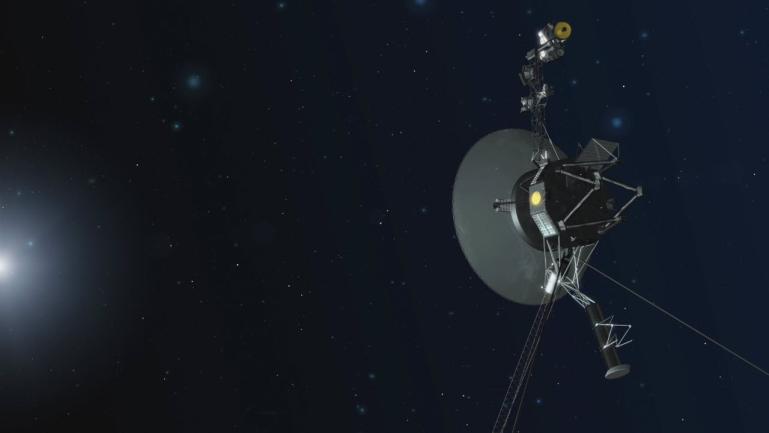
Voyager in Deep Space

Voyager in Deep Space
An artist concept depicting one of NASA's twin Voyager spacecraft. Humanity's farthest and longest-lived spacecraft are celebrating 40 years in August and September 2017.
The Voyager spacecraft were built by JPL, which continues to operate both. JPL is a division of Caltech in Pasadena. California. The Voyager missions are a part of the NASA Heliophysics System Observatory, sponsored by the Heliophysics Division of the Science Mission Directorate in Washington. For more information about the Voyager spacecraft, visit

view full-res JPG
download full-res TIFF

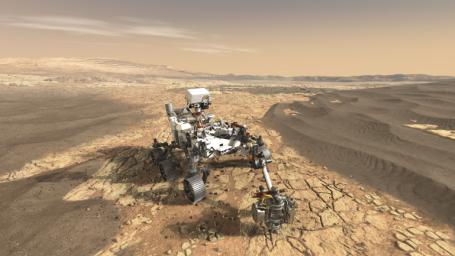
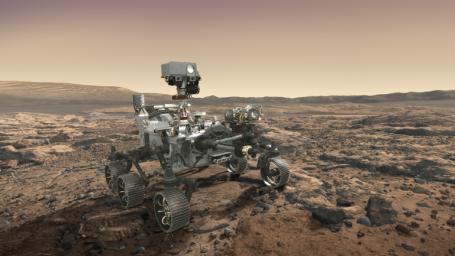
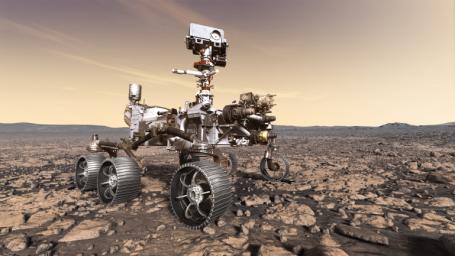
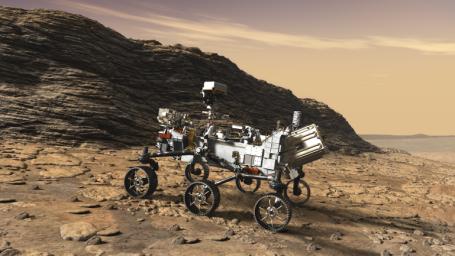
NASA's Mars 2020 Rover Artist's Concept


view full-res JPG
download full-res TIFF


view full-res JPG
download full-res TIFF


view full-res JPG
download full-res TIFF


view full-res JPG
download full-res TIFF


view full-res JPG
download full-res TIFF


view full-res JPG
download full-res TIFF


view full-res JPG
download full-res TIFF


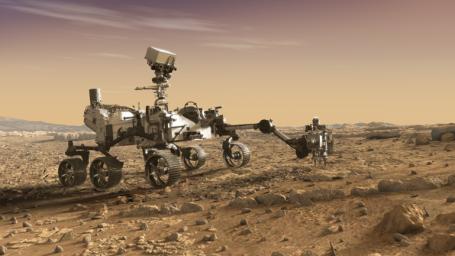
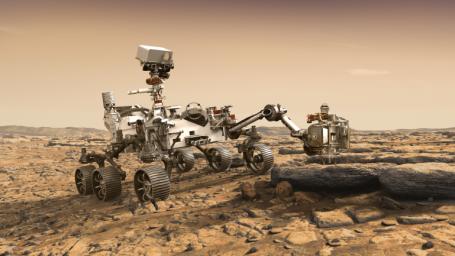
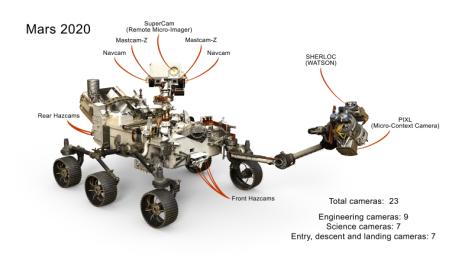
This artist's concept depicts NASA's Mars 2020 rover exploring Mars.
The mission will not only seek out and study an area likely to have been habitable in the distant past, but it will take the next, bold step in robotic exploration of the Red Planet by seeking signs of past microbial life itself.
Mars 2020 will use powerful instruments to investigate rocks on Mars down to the microscopic scale of variations in texture and composition. It will also acquire and store samples of the most promising rocks and soils that it encounters, and set them aside on the surface of Mars. A future mission could potentially return these samples to Earth.
Mars 2020 is targeted for launch in July/August 2020 aboard an Atlas V-541 rocket from Space Launch Complex 41 at Cape Canaveral Air Force Station in Florida.
NASA's Jet Propulsion Laboratory builds and manages the Mars 2020 rover for the NASA Science Mission Directorate at the agency's headquarters in Washington.


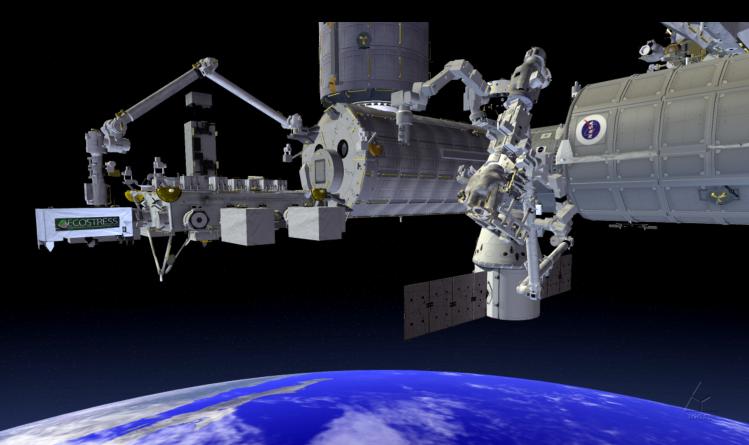
NASA's ECOSTRESS Investigation Being Installed on the International Space Station

NASA's ECOSTRESS
This image depicts the ECOSTRESS module installed in the wrong site on the International Space Station's Japanese Experiment Module Exposed Facility Unit and is no longer being used. A new image showing the correct installation location of ECOSTRESS on the space station is forthcoming.
JPL built and manages the ECOSTRESS mission for NASA's Earth Science Division in the Science Mission Directorate in Washington. ECOSTRESS is sponsored by NASA's Earth System Science Pathfinder program, managed by NASA's Langley Research Center in Hampton, Virginia.

view image full-res JPG
download full-res TIFF

GRACE Follow-On Satellites

GRACE Follow-On Satellites 

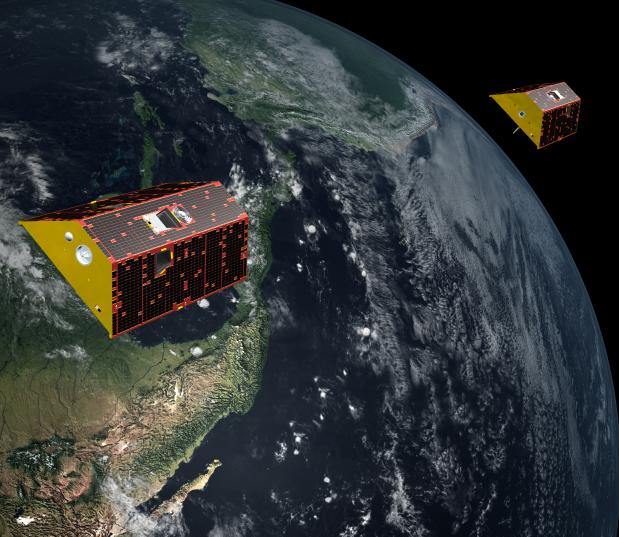
Illustration of the twin spacecraft of the NASA/German Research Centre for Geosciences (GFZ) Gravity Recovery and Climate Experiment Follow-On (GRACE-FO) mission. GRACE-FO will continue tracking the evolution of Earth's water cycle by monitoring changes in the distribution of mass on Earth.
GRACE-FO continues a successful partnership between NASA and Germany's GFZ, with participation by the German Aerospace Center (DLR). JPL manages the mission for NASA's Science Mission Directorate in Washington.

view picture full-res JPG
download full-res TIFF

GRACE Follow-On Satellites

GRACE Follow-On Satellites

Illustration of the twin spacecraft of the NASA/German Research Centre for Geosciences (GFZ) Gravity Recovery and Climate Experiment Follow-On (GRACE-FO) mission. GRACE-FO will continue tracking the evolution of Earth's water cycle by monitoring changes in the distribution of mass on Earth.
GRACE-FO continues a successful partnership between NASA and Germany's GFZ, with participation by the German Aerospace Center (DLR). JPL manages the mission for NASA's Science Mission Directorate in Washington.

view picture full-res JPG
download full-res TIFF


Plume, Galileo, Magnetic Field

Plume, Galileo, Magnetic Field 

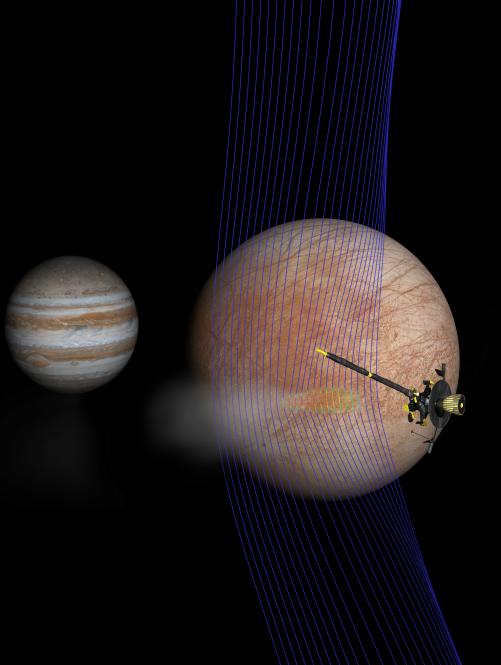
Artist's illustration of Jupiter and Europa (in the foreground) with the Galileo spacecraft after its pass through a plume erupting from Europa's surface.
A new computer simulation gives us an idea of how the magnetic field interacted with a plume. The magnetic field lines (depicted in blue) show how the plume interacts with the ambient flow of Jovian plasma. The red colors on the lines show more dense areas of plasma.

view picture full-res JPG
download full-res TIFFF

Artist's Concept of Voyager

Artist's Concept of Voyager


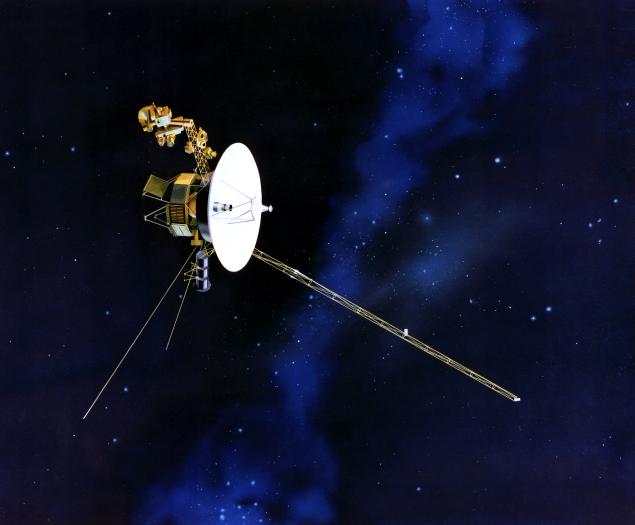
This artist's concept of the Voyager spacecraft with its antennapointing to Earth. The identical Voyager spacecraft are three-axis stabilized systems that use celestial or gyro referenced attitude control to maintain pointing of the high-gain antennas toward Earth. The prime mission science payload consisted of 10 instruments (11 investigations including radio science). Only five investigator teams are still supported, though data are collected for two additional instruments.

Download full-res TIFF

Voyager in Deep Space (Artist Concept)

Voyager in Deep Space

An artist concept depicting one of NASA's twin Voyager spacecraft. Humanity's farthest and longest-lived spacecraft are celebrating 40 years in August and September 2017.
The Voyager spacecraft were built by JPL, which continues to operate both. JPL is a division of Caltech in Pasadena. California. The Voyager missions are a part of the NASA Heliophysics System Observatory, sponsored by the Heliophysics Division of the Science Mission Directorate in Washington. For more information about the Voyager spacecraft

Download full-res TIFF